Chiltern Welcomes
Amersham - A Place Of Refuge
Destination Amersham
The story of the Chilterns as a place of refuge has been compiled from local historian Alison Bailey’s presentation “Destination Amersham” for Refugee Week in June 2023.
(Presentation won't be displayed on smaller mobile phone screens).
 The Chilterns has a long history of providing refuge and there are even some “celebrity” refugees who lived locally. Madeleine Albright, née Korbel (US Secretary of State 1997 -2001), fled Czechoslovakia as a refugee from the Nazis and lived with her family in Beaconsfield and Berkhamsted. Dame Steve Shirley was a pioneering businesswoman and philanthropist who lived in the Old School House, Bois Lane for 25 years. She arrived in Britain age 5 as a child refugee from Nazi Germany on the Kindertransport.
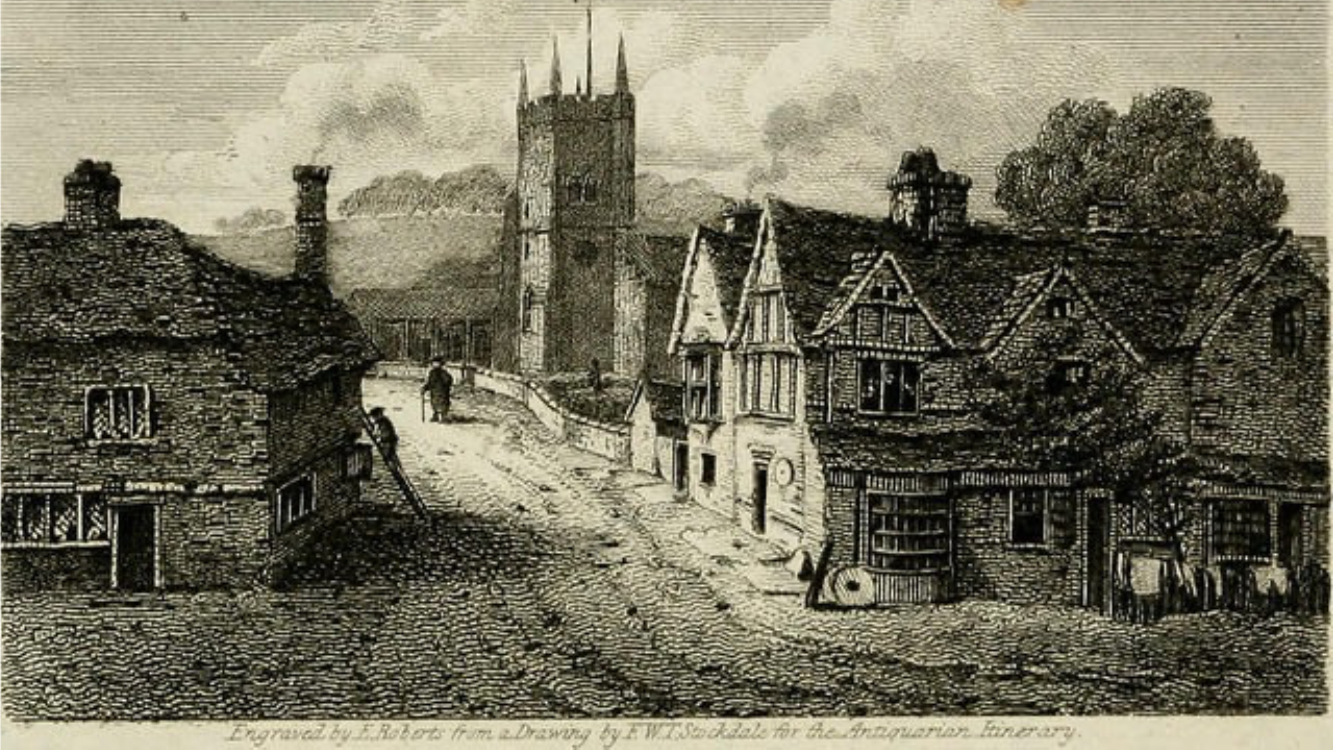
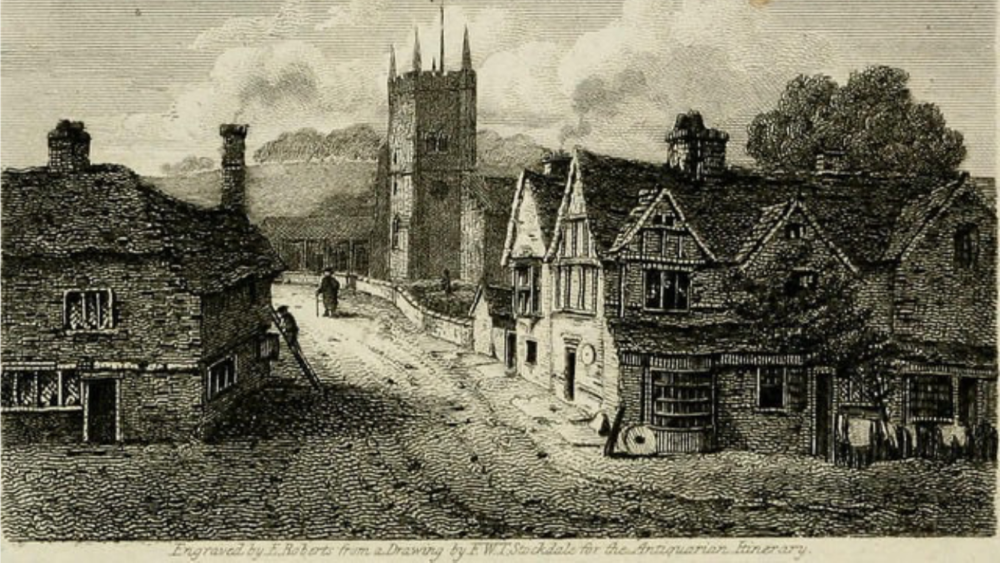 The history of foreign nationals living in this area can be traced back to Medieval times when Amersham was a small, rural but relatively prosperous town, thanks to the river and the fertile farmland that surrounded it. It was also a meeting point for various routes for drovers and merchants crossing the country to and from London and other market towns. The late middle ages did not have any of the large-scale migrations of the Anglo-Saxon, Viking and Norman times. Yet migration continued on a small scale, due to opportunities for work and trade and natural disasters such as the Black Death or the St Elizabeth Day Flood in Holland and Zeeland in 1421.
 Tensions grew between the native population and ‘foreigners’ living and trading in England as the economic situation in England declined. In 1440 Parliament agreed that a tax should be paid by all non-native-born people residing in England over twelve years of age, the first time this kind of tax had ever been levied.
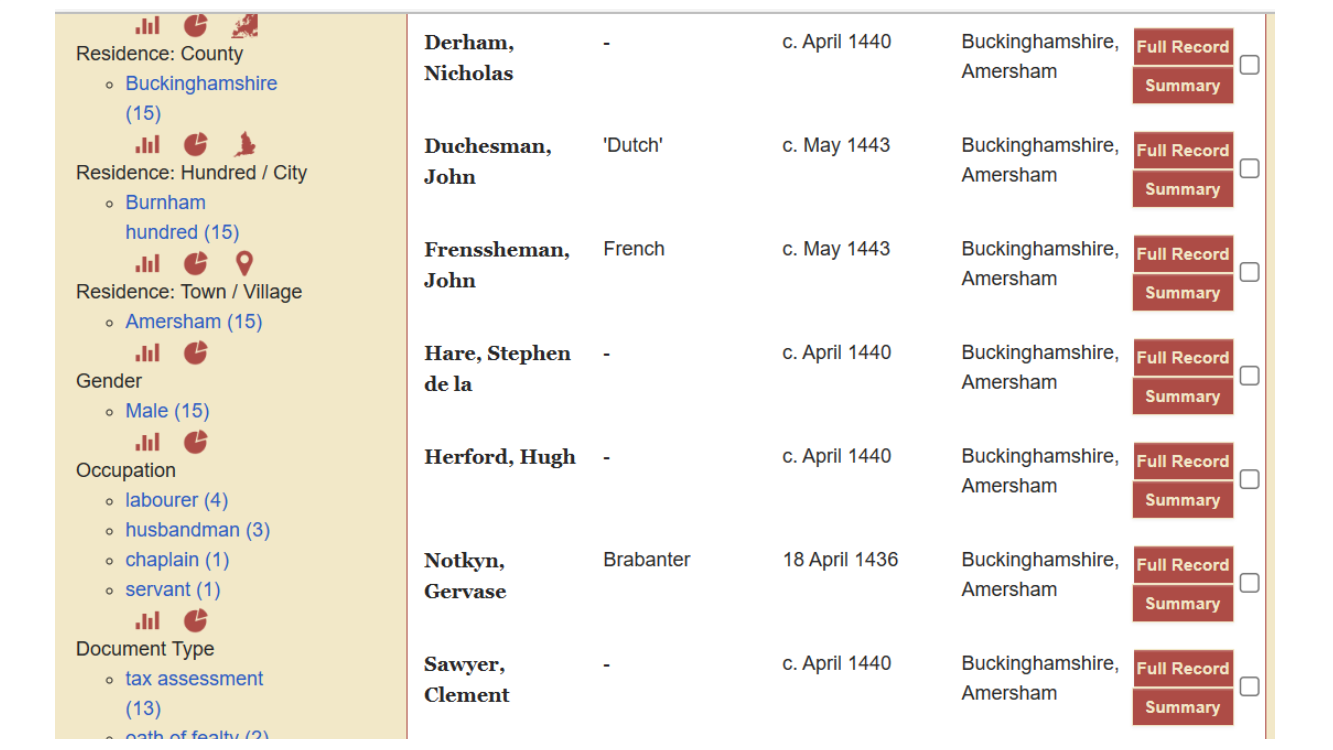 This meant that records had to be kept and ‘alien’ males counted. In total 15 were counted in Amersham. However, the true number would have been higher if they had wives or children with them. The population in in 1440 can be estimated to be around 800. If 10 of those 15 men had wives and 4 children each, the alien population could have been 65 – around 8% of the total population of Amersham.
 We see a glimpse of another refugee story in the area, through Bucks Point or Bobbin lacemakers. This style of lace made in Bucks, Northants and Berkshire is derived from Huguenot lacemakers who settled in the region in the 1560s at the invitation of local landowners such as the Lord William Russell, the son of the Duke of Bedford and George Gascoigne who had both fought for William of Orange against the Catholics and offered to protect the Huguenots fleeing religious persecution. Later waves of Huguenot refugees mainly came from France. The style of lace made locally and still called Bucks Lace today is a Mechelen pattern (Mechelen is near Antwerp in Flemish Belgium) on a Lille background.
 Moses Roper was born enslaved in North Carolina around 1815. He left America for Great Britain where slavery had been abolished. He was provided an education by British abolitionists and published his own account of his experiences as a slave, touring the British Isles, from Penzance to Inverness giving lectures on the horrors of slavery. Moses spoke in many of the towns of Buckinghamshire including Marlow, High Wycombe, Beaconsfield, and Chesham. He also toured smaller rural communities such as Chenies, Little Kingshill, Speen and Great Missenden. The Bucks Archive have this promotional poster advertising a talk at Haddenham Baptist Meeting House in 1844.
 WW1 brought mass movements of refugees. After Germany’s invasion of Belgium in August 1914, one and a half million Belgians fled the country, of which 250,000 arrived in Britain. Many camps were established in London where refugees were registered and then dispersed across Britain. In September 1914 the Bucks County Relief Committee was formed in Aylesbury with similar committees founded in Amersham, Chesham and Chesham Bois. The first refugees arrived in Chesham in October and by December around 50 were living in Church Street and referred to as ‘Chesham’s guests’ in the local paper.
 The local committees and churches rallied round to collect money, clothes and furniture for the refugees. In Amersham the relief effort was co-ordinated by this extraordinary woman, Henrietta Busk, the first woman elected to Amersham Rural District Council.
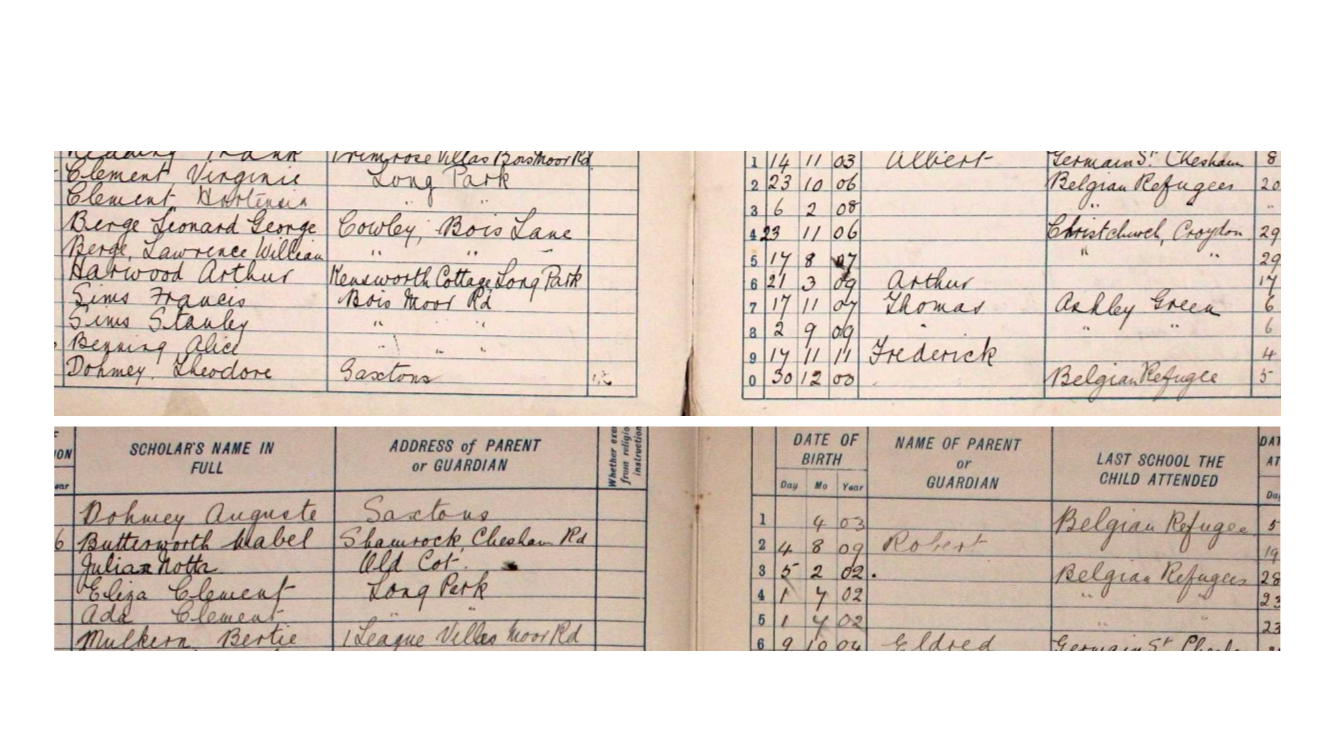 Entries in the Admission Registers of Chesham Bois Church of England School in Bois Lane show several children enrolled in January and February 1915 listed as Belgian refugees.
 The local Catholic population approximately doubled owing to the influx of Belgians with the nearest Catholic Church in Eskdale Avenue Chesham, so a plot of land was purchased early in 1915 to build a new Catholic Church here. Our Lady of Perpetual Succour in Chesham Bois is one of the only reminders that Belgian refugees ever lived in the area as most returned to Belgium after the war.
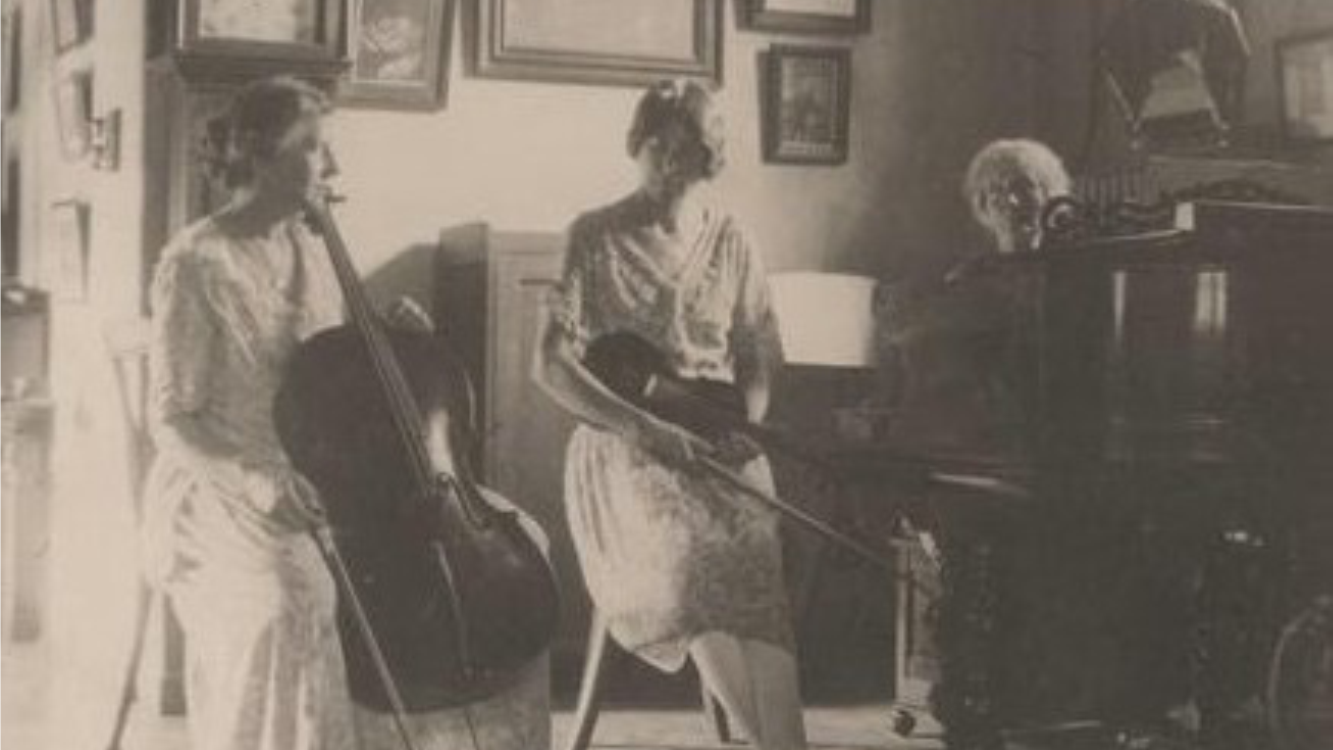 Local women’s groups were a key part of the support network for the Belgian refugees. In Chesham Bois were these women, Sophie Colenso and her musical daughters, Irma and Sylvia from Elangeni House who gave concerts to fundraise for refugees. Committed suffragists, they continued to campaign during WWI as members of the United Suffragists. They were very radical politically and great friends with the first Labour Prime Minister Ramsay MacDonald and his wife Margaret who also had a weekend house in Chesham Bois.
 Margery Abrahams, was born into a wealthy Jewish family and moved to Amersham when her father, Bertram Abrahams, a doctor, built a fine Arts and Crafts house, the Chilterns off White Lion Road at the beginning of the 20th century. She lost both her parents very young and was raised by an uncle, John Simmons. She became active in the move to establish the Kindertransport from Nazi Germany. She herself adopted children in need during the war including Dorothea Bach from Czechoslovakia who lived in Amersham for the rest of her life.
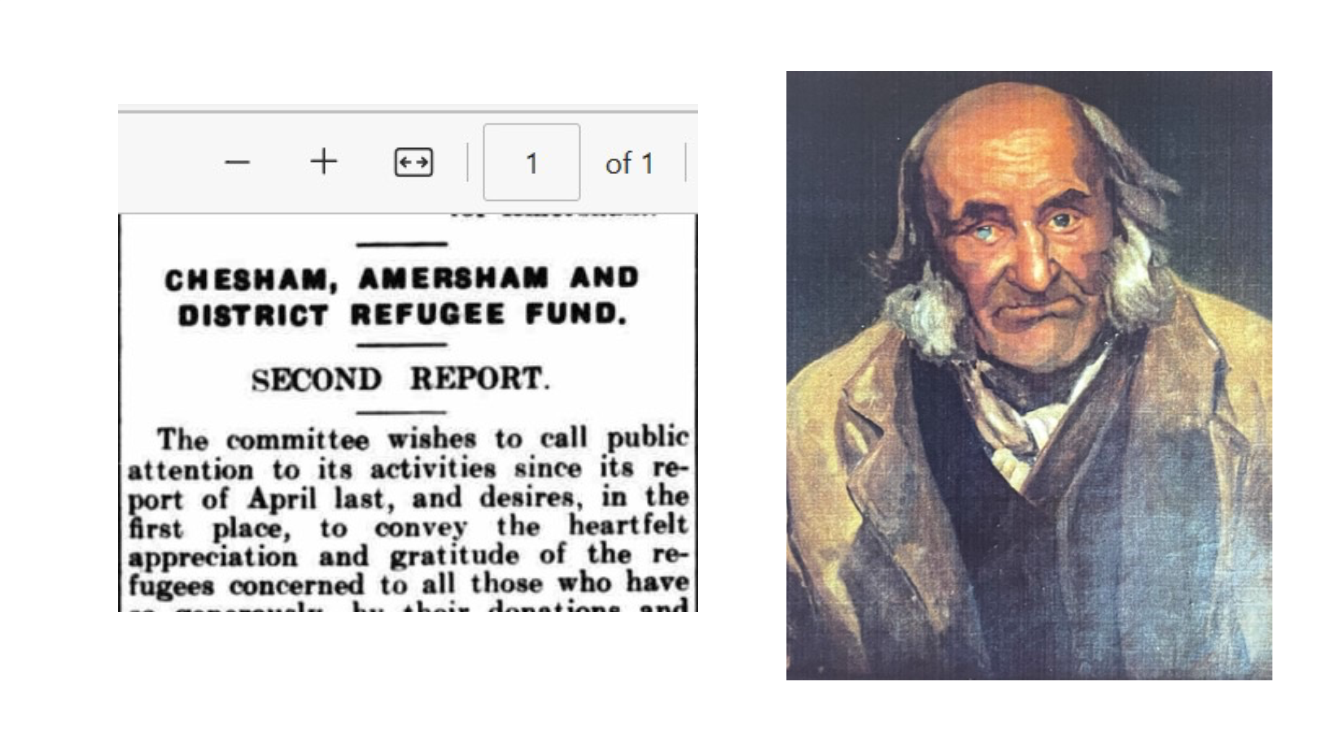 Her uncle, John Simmons was a painter and founder of the Bucks Art Society and painted this great portrait of an Amersham character, Dormer Gladman. He also established the Chesham, Amersham and District Refugee fund in the 1930s. It is reported in June 1939 the committee were already supporting 12 Austrians in 2 rented houses at Ashley Green and Orchard Leigh and were expecting more refugees in the near future from Czechoslovakia.
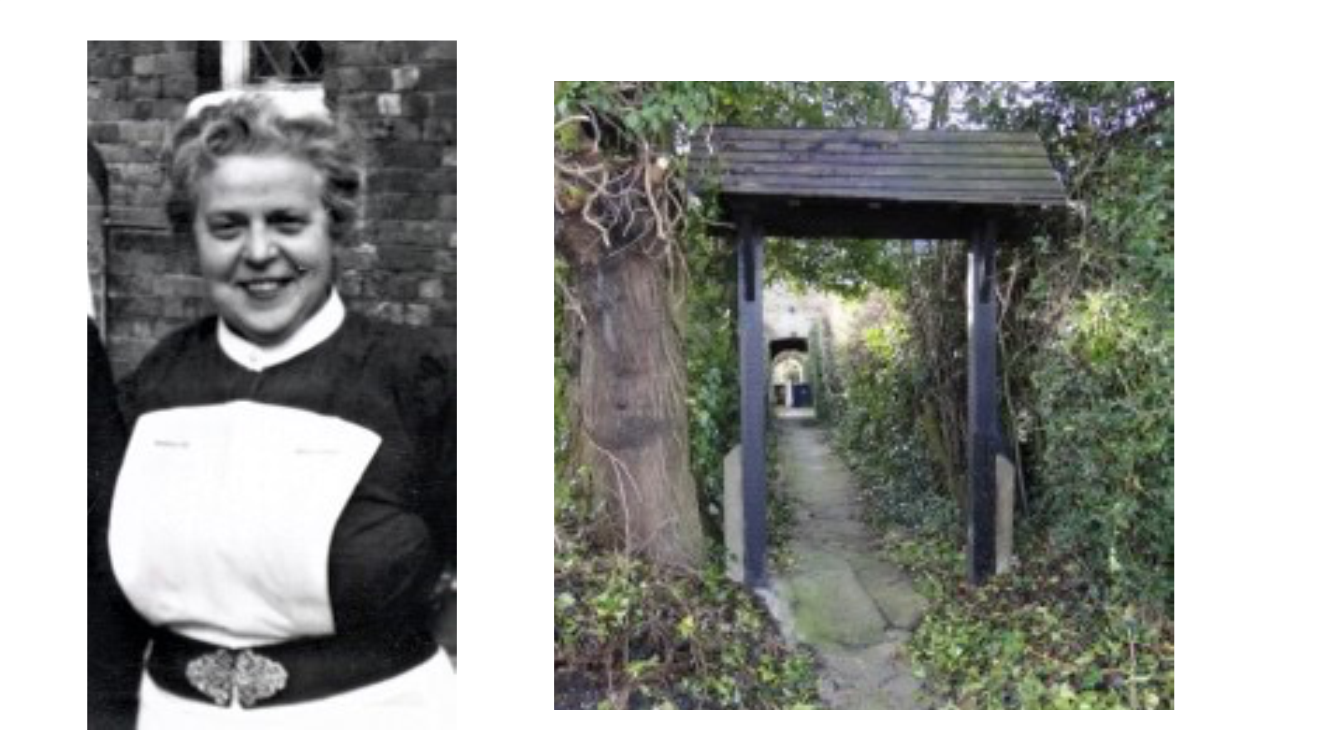 After war was declared, Amersham Hospital became an Emergency Services Hospital led by St Mary’s Paddington and new nurses were recruited. One of the nurses, Sister Katy Krone helped transform the Old Amersham workhouse into the hospital. She was one of the many German Jewish refugees who found sanctuary here during the war. Having a nursing qualification or being prepared to work as a servant were the only ways for adult Jewish women to get entrance visas into the UK. Together with the British-born Jewish evacuees, a handful of Jewish families who’d been in the area for generations and the many domestic servants and a handful of nurses living locally, formed a vibrant community in the area. They even established their own Synagogue in Woodside Road, one of only 2 new Synagogues built in the UK during the war which should be considered an incredible achievement when synagogues were being destroyed all over Europe and their congregations murdered. The photo shows the entrance which is still there today.
 Jewish servicemen in the area were invited by local families to celebrate Sabbath dinners and celebrate Jewish festivals. It is likely than some of these came from Latimer House which during the war was a top secret prisoner of war camp led by Colonel Thomas Kendrick. After it was established in 1942 every German POW was processed here before being sent on to a holding camp. Unknown to the prisoners their every conversation was listened in to by German speaking servicemen, usually Jewish refugees who gathered incredibly important intelligence, specifically about V1 and V2 rockets, which helped us win the war.
 In 1939, Fritz Lustig arrived in Britain after fleeing his home city, Berlin as the Nazis were rounding up all Jewish men and sending them to concentration camps. As an “enemy alien”, he was interned on the Isle of Man in the summer of 1940, before being allowed to join the British army’s Pioneer Corps and from there he was recruited to the Intelligence Corps at Latimer House and met his future wife, Susan Cohn, also a refugee from Germany who had arrived in Britain on a servant’s visa. She lost her job when war was declared, and her employer didn’t want a German in the house. At Latimer House, whilst working on prisoners’ personal highly classified intelligence files, she came across the papers of her former English teacher from Breslau who was being held in the camp. She ‘put in a good word for him’ as she knew he was not a Nazi and ‘he was soon transferred’.
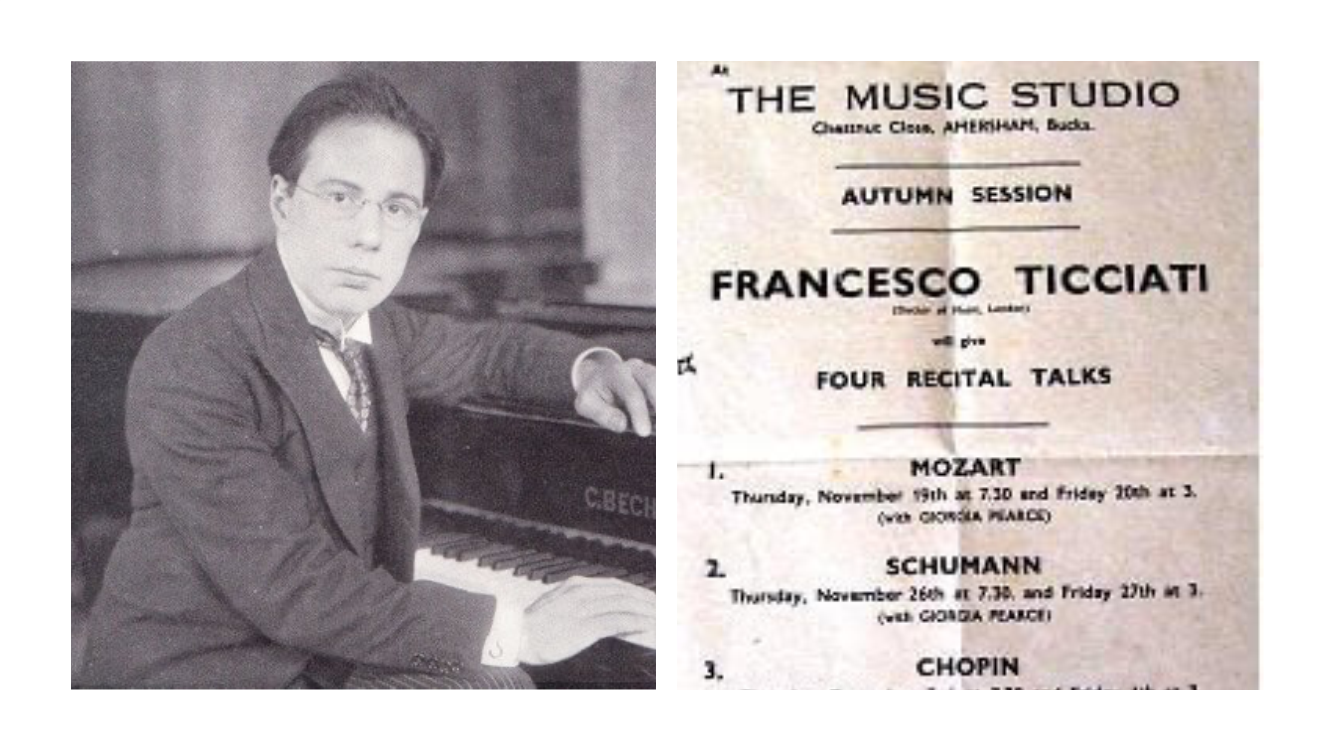 Composer and concert pianist, Francesco Ticciati, was a refugee from Mussolini’s Italy who was lodging at the Music Studio 22 Chestnut Close. This was the home of Giorgia Pearce, a former suffragette, writer, composer and piano teacher from London. The Studio became a meeting point for émigré musicians, writers and intellectuals. Francesco founded a musical dynasty. One of his great-grandchildren is the conductor Robin Ticciati, the musical director of Glyndebourne.
 Many émigré artists were part of this circle. Mary Duras, was an established German speaking sculptor from Prague. She was in Britain in March 1938 to hold an exhibition when German troops marched into Czechoslovakia. As a member of an anti-Nazi group, she successfully applied for refugee status.
 Mary Duras lodged at Small Dean Farm, near Wendover Dean at the home of artist Augusta North who allowed her to convert a barn into her studio. Here she created several busts including one of Winston Churchill and one of Jan Masaryk, the Foreign Minister of the Czechoslovak Government-in-Exile, based in Wingrave.
 Russian photographer, Laelia Goehr was another from the group. Laelia was a refugee twice in her life, first fleeing Bolshevik Russia when she was 13 and then 10 years later fleeing Nazi Germany. As a Jew, her composer husband Walter was unable to work anymore and gratefully took up a job in London for the Gramophone Company, later EMI.
 A professional musician herself Laelia became interested in photography when she became a volunteer for the YMCA Snapshots from Home League. She later became known for her photos of dogs and musicians such as that of Jacqueline du Pré.
 Marie-Louise von Motesiczky, was a Viennese painter who had trained with Max Beckmann but was just at the start of her career. She fled her very comfortable life in Vienna with her mother the day after the Anschluss. Mary said she stook a pin in a map of the home counties and it landed on Amersham.
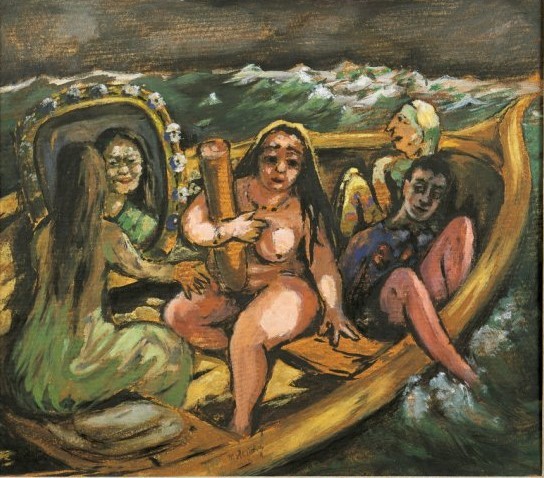 Marie- Louise von Motesiczky painted this disturbing painting in 1940 to express her experience of being a refugee. It is called The Travellers and she said it recalled her experience of crossing the Channel. The four people are inappropriately dressed particularly the woman, a portrait of the artists mother, in the centre who is particularly vulnerable and exposed. There are also prized possessions in the boat and banal objects like a bratwurst. Her own expression in the mirror is supposed to represent a manic cheerfulness – they have escaped but have no idea what the future holds. Sadly, the young man on the right is a representation of her beloved brother, Karl who didn’t escape with them but was later murdered in Auschwitz.
 Marie-Louise bought Cornerways in Chestnut Lane to live in with her mother and family retainer Marie Hauptman. This is where Marie Louise had her studio and stored her lover, Elias Canetti’s huge collection of books. Canetti was also a refugee from Nazi Europe. He later became a Nobel prize winning author, most famous for Auto da Fé. Party in the Blitz was his memoir of his time in Amersham.
 Cornerways, like the Music Studio became a meeting place for intellectuals, writers and artists. Visitors included the Czech poet and anthropologist, Franz Baermann Steiner and the Austrian Expressionist, Oskar Kokoschka who was a major influence on Marie-Louise’s work. Frederick Kankam Boadu and Joe Appiah were students and anti-colonial activists from The Gold Coast (now Ghana) also visited. In Amersham Museum’s collection of Marie-Louise’s paintings, there is one with a self-portrait in the centre with representations of her mother and aunt behind her, painted after the war. The aunt survived the Nazi occupation of Amsterdam, but the painting conveys how bleak the whole experience of the war has been.
 There was another local community who contributed to our area in all sorts of ways. This was the Polish community. The woods surrounding Amersham were filled with soldiers’ camps and these were gradually emptied out as soldiers were demobbed and returned home. The exception was the Polish soldiers who did not have a home to go back to as this was now occupied by the Soviet Union. Eventually Hodgemoor camp on Gore Hill on the road to Beaconsfield was designated a Polish resettlement camp.
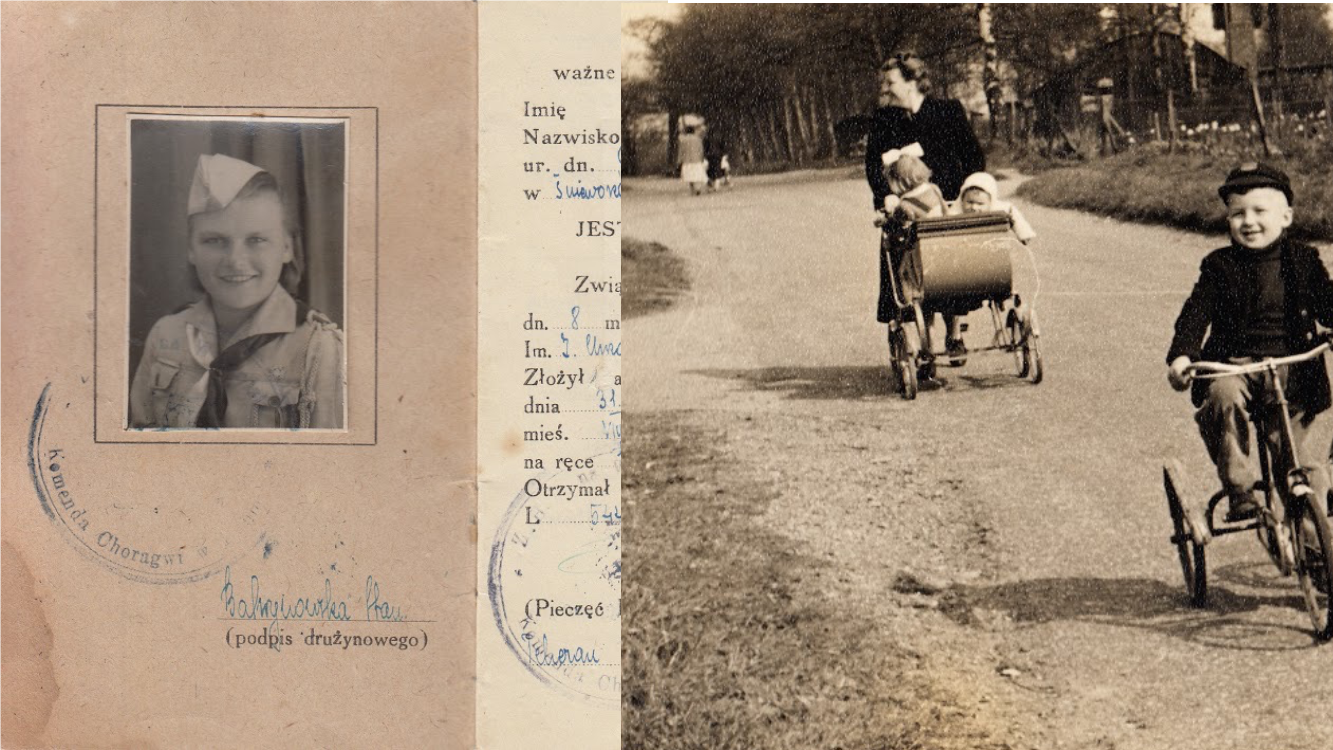
 When the war ended in 1945, 16-year-old Wladzia Tanska, née Pogoda had not yet arrived in Amersham. She was in a temporary refugee camp in the Middle East, probably in Lebanon, and had suffered unimaginable hardship. Wladzia was a homeless refugee for 8 years before arriving in Liverpool on 12 September 1948. She was offered a temporary home at the Polish resettlement camp at Hodgemoor Woods near Amersham and stayed here for 10 years. The Pogoda family lost everything when Russian soldiers forced them at gun point to leave their home in 1940. With her parents, 4-year-old sister, Irena, and elderly grandparents, Wladzia was locked in a cattle wagon for 3 weeks and transported to Siberia. In Siberia food was very scarce. They lived in primitive wooden sheds in Soviet work camps with only a hole in the ground for a toilet shared between many huts. There was deep snow and temperatures often fell to -40 degrees. A year later the family were transported to a Polish refugee camp in Uzbekistan, where it was very hot, and they slept on the floor of a mud hut. Wladzia was sent to an orphanage when her family contracted typhoid. She remembered masked soldiers wearing long white gloves and bodies loaded onto lorries like logs. When the war ended Wladzia’s uncle and cousin were already in England after liberating Italy with the Polish army. They immediately started proceedings to bring all the family over. At Hodgemoor, Wladzia met a young soldier, Jan Tanski, and got married. Hodgemoor Camp provided a safe home to over 150 Polish families after the war in temporary buildings, barracks and Nissen huts. Conditions were basic but it was a proper community, a Polish village with a Church, with its own priest, an infant school, a post office, a shop and an entertainment hall used for meetings, plays, and celebrations. Many Polish families emigrated all over the world but Wladzia and Jan settled in Amersham bringing up their 3 children here.
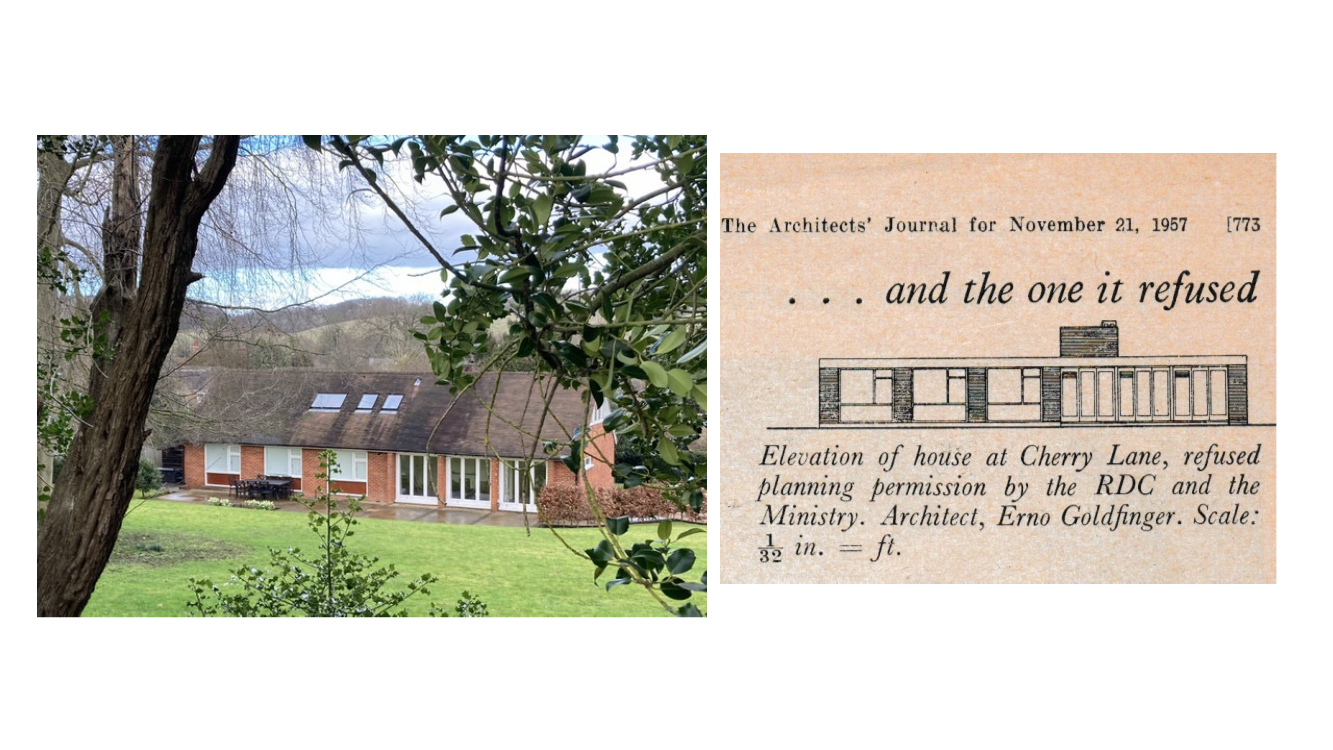
 Dorothea Bach arrived on the Kindertransport and was adopted by Margery Abrahams in Amersham. She married and became Dorothea Wallis. Margery bought Piers Place in Old Amersham to redevelop the garden to create a building plot for Dorothea and her new husband. They commissioned the émigré architect Erno Goldfinger to design their new house. This is Red House as it was finished on the left in Cherry Lane, and this is the design that Goldfinger wanted to build but ARDC wouldn’t let him have a flat roof so a compromise was agreed with the pitched roof. So, this house is another surprising legacy of refugees in Amersham.
 In recent years, there have been more refugee stories from different areas. We hope you can explore the story section of the website that details some of the more recent refugee stories that we have collected.